Showing posts with label Author. Show all posts

Saturday, February 12, 2022

Are You on BookBub?


Are 
you on BookBub?

Just a quick note to introduce you to BookBubif you haven't heard of it already.

BookBub is a great place to:

  1. Follow your favorite authors (I follow authors like Kristin Hannah, Nicholas Sparks, and Elin Hilderbrand).

  2. See what books authors are reading and recommending (I have recently recommended 4 books, including A Fall of Marigolds by Susan Meissner and The Wish by Nicholas Sparks).

  3. Keep up with new releases. 


Jersey Girl Book Review recently reviewed Summer’s Wisdom on BookBub and concluded with this:
'Summer's Wisdom is a heartwarming and thoroughly enjoyable story. You can't help but root for Jamie as she discovers that her world is filled with a loving family and friendship, along with a sense of belonging, finding love, following one's passion, and that she's ultimately in control of how she lives her life with self-acceptance and happiness. Summer's Wisdom is an inspirational and feel good women's fiction story that will pull at your heartstrings, touch your soul, and leave a smile on your face."

Buy Summer’s Wisdom on Amazon

I hope you are all having a great start to 2022!

Well wishes,
Heather 

Tuesday, August 18, 2015

Q&A with Best-Selling Author Renee Carlino

If you love a good New York City love story, you will fall in love with Matt and Grace. Before We Were Strangers  (Atria Books, August 18, 2015) by Renee Carlino is a complicated love story of missed opportunities and the influence that outside factors have on a couple’s journey…or is it all really just part of their journey? I pulled Renee away from her writing desk to answer a few questions for her ever-growing fan base.


HH: What was your inspiration in using New York City as the backdrop to Grace and Matt's story?

RC: When people normally ask me what BEFORE WE WERE STRANGERS is about, I  say it's about a guy who sees "the girl who got away" on a New York subway fifteen years after they last saw each other. But I think BWWS is really about how people, rather than places or things, can color our experiences. I thought Matt and Grace would fall in love with New York together. Through their exploration of the city, they got to know each other, so NYC made for a great backdrop. There is an undeniable energy there, but I also thought it could be a place where one might feel extremely isolated among the masses, which is how we find an older Matt at the beginning of the book. I've been to a lot of cities in the US, but every time I visit New York, I get a sense of vitality and togetherness, yet at the same time I feel extremely small. I see New York City as a versatile character that I can use in many different ways to help tell a story.

HH: Both Grace and Matt are complex, deep characters...do you spend a lot of time character sketching before writing? 
RC: I usually know the big pieces before I start the book. Through the writing process other characteristics will develop, like the way Grace smells her food or swings a door open wider than the average person to accommodate her cello case, even when she's not carrying it. They are alive in my head and not based on a real person, so I suppose I am sketching them but not necessarily on paper. I do flesh the characters out much more in revisions so I enjoy the editorial process and find it extremely beneficial and rewarding.

HH: On a Saturday night would you rather be home in sweats or out in a LBD and heels? 
RC: I love my sweats and being a writer allows me to be in them an awful lot. I don't know any writers who get ready, do their hair and put on make-up to sit at the computer for six hours, so on a Saturday night I enjoy getting dressed up and going out when I can.

HH: Explain the muse of music as a prominent theme in your novels. 
RC: I just cannot live without music, so it finds its way into all of my books and it is the best food for my imagination. For BBWS, I remembered watching Nirvana Unplugged on MTV and thinking about the cello player. I wished that I could play like her. When I started researching this book, I found a more recent youtube video of Lori Goldston, the same cellist. She was playing in a station in Seattle. As soon as the music began, I got chills. The way she describes her instrument in the video is inspiring.

HH: If you could meet one of your characters in person, which one would it be? 
RC: I would want to meet Matt from BEFORE WE WERE STRANGERS. He's closer to my age, he and I share a passion for photography and I think I would have a lot of questions about his work for National Geographic. He seems like he would be a great conversationalist, which is high on my list of good qualities.
Thank you, Renee!

Wednesday, July 01, 2015

Is Your Author Bio Up to Par? 10 Tips on How to Write an Author Bio

Kind of like kids knowing they need to eat their veggies, authors know the importance of a well-crafted bio, but that still doesn't mean they like writing one.

Several years ago when I taught writing workshops through Barnes & Noble in Charlottesville, VA, the first exercise I had students do was write their author bio. The cringing, seat shifting, pen-tapping task gets them every time, and every single one of them groaned in unison. And yet, by the end of that first class, they proudly took home a well-crafted bio to stick on their refrigerator. To my surprise, each one returned the next week to see what hoops I'd make them jump through next.

That teaching experience taught me that authors really, truly despise writing their own bios. To help the medicine go down a little easier, I came up with my top 10 tips for writing a quality author bio:

1. You will need up to three versions of your bio. (Yes, I thought you'd love to hear that!) Write an extended bio for your website, proposals, interview sheets and media kits; a medium length bio for queries, guest spots on other websites and shorter marketing material; and a brief bio as a byline or for limited character social media websites.

2. Go ahead -- brag! Start with your greatest writing achievement. As an aspiring author, even one published article in the local paper counts and should be highlighted.

3. Leave your demographics for the end and keep it brief. Though the mere fact that you were born is awesome, as a new author, it's more important to establish yourself as a writer first.

4. When listing book publications, should you have any, italicize the title and do not put in quotation marks. Include the publisher and year published in parentheses after the title: i.e. Title of Your Book (Publisher, 20_ _).

5. Refer to yourself in the third person. On the longer bios, I personally like to interject "Heather" a few more times rather than using the pronoun.

6. The credibility an award gives a book can change the life of it! However, note only awards that are relevant to your writing. For example, if you write nonfiction gardening books and you won an award for your outstanding garden, then brag about it. Alternatively, if you won a blue ribbon for your brownies, but you write science fiction, leave out the blue ribbon (but feel free to send me the brownies!). Be sure to update your bio as the awards come in. When two of my books won awards within the same month, I immediately updated my author bios on my website and other places.

7. BS? BA? BIS? MBA? Ph.D.? When it comes to education, much like awards, if your degree is relevant, then note it. If you have a Ph.D. in psychology and are writing a book on teenage bullying, then certainly note it -- it's a credential. Alternatively, if your degree is in architecture and you changed careers to write children's books, unless your book is about how to build the coolest Lincoln Log cabin on your block, you can leave the degree out (especially in the short bio). I have a BIS degree in English and Secondary Education from the University of Virginia. These credentials support me as a writer, writing coach and workshop instructor, so I use it in my long bio.

8. Your bio will change dramatically as your career advances. In that same Barnes & Noble class, I showed student my 2007 bio and my then 2010 bio. It's amazing what a difference three years can make. I started my 2007 bio with the fact that I "reside in the midst of the Blue Ridge Mountains" because I thought it sounded really cool and literary at the time. I learned that where you live isn't so important. It was my publishing credits that advanced my career and changed my bio. Think of it like this -- it's not where you write, it's what you write!
Bonus: If you haven't read Stephen King's On Writing: 10th Anniversary Edition: A Memoir of the Craft, I highly recommend it.


9. If you can, have a professional (or at least a really good) photographer take a quality author photo of you. I used a photographer in Colorado and it took more shots than words on a page to capture the perfect shot. Once you have it, use it shamelessly. Most authors are not recognized by what they look like unless they're John Grisham, who resides here in the midst of the Blue Ridge Mountains, and author of dozens of books including, A Time to Kill: A Novel and Rogue Lawyer. But, an author photo is needed for your book's jacket, your website, social media and press kit (at the very least). Take the time to do it right. (You can read my previous article titled "The Relevance of a Professional Author Photo.")

10. Browse the Internet and look in the books on your bookshelves for ideas. Especially read the bios of authors who write in your genre.

11. Bonus tip: Read your bio aloud when you finish writing it. You'll know immediately if something doesn't sound right.


Monday, June 29, 2015

The Relevance of a Professional Author Photo

Due to social media, an author photo connects authors with their audience now more than ever. Since these images are not only long lasting on books, but are also shared on social media outlets, isn't it worth making sure they're great? The answer ought to be an obvious: "yes!" So, why are there so many unprofessional author photos out there, when it is the one visual expression that says: "This is the person who created the work you're about to read,"?

A quality author photo is one of the most important aspects of becoming an author, and yet it often slips through the cracks. Indeed, there are some very professional, well done author photos out there, but for as many great ones, there are a plethora of faulty ones. I am not one to use clichés, but as a photographer, I completely agree that a picture does say a thousand words. I look at it this way: If an author is trying to attract readers to read the tens of thousands of words they've spent months or years writing, they should use their best author photo possible.

This is where my experience as a photographer lets me address the author photo from both sides of the lens.
If you spend months or years writing a book, spend at least a day preparing for your author photo, because it is a critical part of your brand. Here is my take on some common problems and their solutions.

Problem: Too serious of an expression.

Some authors' facial expressions are overly serious -- as though such an expression depicts intelligence and print worthiness. Yet, depending on their genre, a serious expression isn't always appropriate.
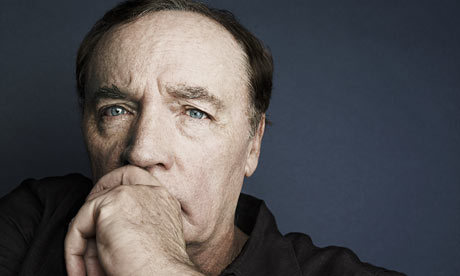
2013-12-24-BestsellingauthorJames.jpg
Photo Credit: Rankin
For James Patterson, author of Truth or Die, Zoo, and countless other books, it completely works. But, if you are a romance author, it won't work.

Solution: Genre considerations.

Before going into a photo shoot, consider your genre and what overall tone it depicts. If you are indeed a romance author, a pleasant expression of contentment is more acceptable than an intense and serious expression. This is one genre that the head tilted to the side and looking off into the distance, works. If you're a thriller writer, go for the intense, James Patterson-type expression. No matter what, keep your expression as natural as possible. A forced expression of any kind will be picked up by the camera.

Problem: Unflattering pose or posture.

When the camera is on you, pay attention to your body language. An author with their arms crossed will come off as defensive. Not everyone is "a natural" in front of the camera, but simple body language concepts go a long way with author photos.

Solution: Depict an inviting image. 

A simple change in position can make a big difference. For example, a person's arms crossed over their lap, while leaning into the camera, is more inviting than arms crossed over a chest and standing upright.
One common pose that works is when an author candidly places their hand on their chin or temple. This is surely an expression of thinking, which is true -- thinking about what to write next is a huge part of being an author. Be sure the look is authentic and not forced, which borders on cliché.
Women, as mentioned above, have the habit of tilting their head to the side, gazing at the camera or off into the distance. This does work for certain genres.

Problem: Photo processing.
 
An image that is off in tone, color, exposure and contrast/brightness, will look unprofessional. These are common problems that are usually fixable by someone who is talented with Photoshop. The ones that frighten me the most, however, are photos where the flash lights up the author's face in all the wrong areas (i.e. forehead and nose).

Solution: Hire a professional photographer. 

A professional photographer will help with not only producing a quality image, but they should also be able to assist with body language and posing.

In terms of a color versus black and white image, many old school male authors tend to lean toward black and white. This can be a great choice, and is often more flattering for those who have a few decades behind them. However, if you are a romance author, I believe your photo should be in color. If you're starting to see a trend between the relevance between genre and your author photo, give yourself a pat on the back.

Problem: Cluttered background.

The backgrounds that scream amateur are the ones with merely a white wall behind the author, or worse yet, but still a popular pick, the author standing in front of shrubbery (oops, did I just describe your own author photo?) Don't get me started on the backgrounds with too many distractions, like a plate hanging on the wall next to their head, or curtains that have busy patterns or aren't framed right in the image.

Solution: Find a background that enhances, not distracts from, your portrait. 

For the most professional results, it makes sense to hire a professional photographer. One great example is that they will know how to work with depth of field. Using "shallow depth of field" in your image will blur out your background, making you pop. "Large depth of field" keeps everything in the background in focus. A busy background, especially one that is in focus, competes with the main subject -- you!
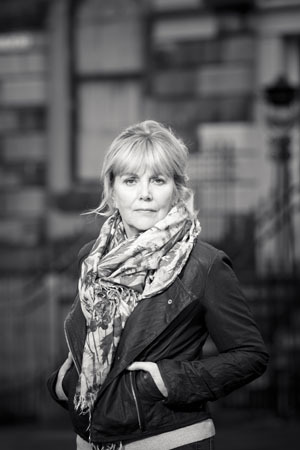
2013-12-24-KATEATKINSONwebsitesmall.jpg

Photo Credit: Euan Myles
I love this photo of Kate Atkinson, author of Life After Life: A Novel, among others . The background is relevant and doesn't compete with, but enhances, her image.

Final thoughts: An unprofessional author photo sends the wrong message.

I realize that I have mentioned hiring a professional photographer as the solution for some of these problems. The reason is that I strongly feel that being an author is a business, and much like you would hire a CPA to do your books, you should hire a professional photographer to take care of your looks. There are several reasonably priced photographers out there who can do a great job. Don't ask a friend or family member to do it unless they have experience as a photographer.

Lastly, I recommend spending some time browsing Amazon for authors in your genre. Take notice of what their images depict, and use it to create the visual you want to send to your readers.

Note: My own author photo was captured by the talented Doug Ellis at Ribera Beach, C.A.


Friday, June 26, 2015

Two Facebook Features Every Author Should Be Using

The number of titles available on Amazon has increased at an unfathomable rate. For example, when I first published through McGraw-Hill in 2008, there were two million books on Amazon. Kindle wasn't a contender at the time, so this number represented paperback and hardcovers. Today, there are over 24 million paperbacks, over 8.5 million hardcovers, and almost 1.3 million Kindle titles. At the time of writing this post: in the last 30 days, 104,606 new Kindle titles were released. That's a lot of authors.

With the need to make their book stand out against tens of millions of others, an author needs every tool in their toolbox. So, image my surprise when many of them weren't taking advantage of two critical Facebook features.

Works At

I continued to be amazed by the number of times I went to a Facebook friend's "About" section on their timeline only to discover they didn't have their Facebook author fan page linked as their "Works At." Worse yet, many times it simply gave the generic term of "Writer at Author" and when clicked, it went through to a generic "Author" page.

I realized rather quickly that too any authors simply didn't know about the Facebook feature that allows them to link their fan page as their "Works At" on their personal profile. When I posted both on my timeline and in one of my writing groups asking if authors knew about this option, the responses in the comments confirmed that many of my friends and fellow writers hadn't known about this option, and they quickly went and added it.

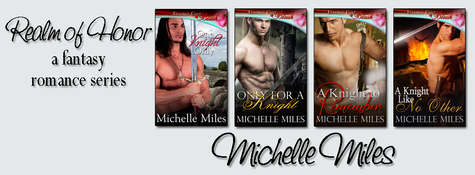
Michelle Miles, a romance author of A Knight to Remember: 3 (Realm of Honor), and well over a dozen other novels, was one of those authors who took the tip to heart and quickly updated her "Works At" to lead her friends to her fan page. Miles is the perfect example of the point I was making. She has nearly 3,000 personal Facebook friends and just over 800 Likes on her author fan page (rather than the other way around). Now that her "Works At" reads "Michelle Miles, Romance Author," rather than "Author," the expectation is to drive those few thousand friends who haven't already Liked her fan page over to her page as new Likes.


I'm focusing on authors here because they are the ones I interact with the most on Facebook. However, any self-employed individual who has a Facebook fan page should consider doing this.

It's easy to update the "Works At" section. Simply follow these steps to update your profile:

• In the "About" section, click on Edit
• In the box that says, "Where have you worked?" start typing the name of your fan page.
• Click on it when it pops up as an option.
• Be sure to also remove any titles that click through to a generic page.
It's that simple.

Cover Photos
2013-12-30-KnightsHeader.jpg

While we are on the subject of fan pages, I should point out that one of the features Michelle Miles was already taking advantage of was optimizing her cover photo. While Miles has over a dozen books in publication, her fan page's cover photo strictly features her Realm of Honor series. Had she used more, let alone all 15 book covers, she would have overwhelmed visitors with visual overload. Reducing it to the Realm of Honor series attracts readers to that series who will likely go on to find and read her other books as well.

For best results, your cover photo should be sized at 851 pixels wide and 315 pixels tall. Any smaller and the image will be stretched. Any larger and part of the image will be hidden. Your cover photo essentially works as a billboard for your books (or service/product). As a professional author, your cover photo should be professional in design and branding.

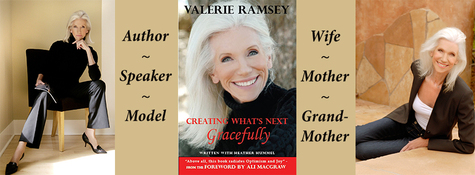
2013-12-30-ValRamseyFacebook.jpg
Author and public speaker, Valerie Ramsey, utilizes her cover photo with images of her book cover and two of her modeling images with a few keywords laid in to describe her. In this cover photo, her brand is represented and visitors instantly establish a feel for who she is when they visit her fan page.

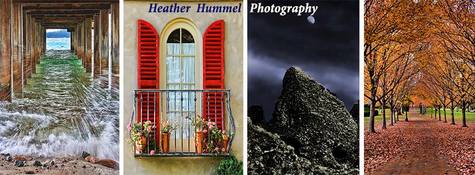
2013-12-30-HeatherHummelPhotographyFanPage.jpg

All photographers should be utilizing both of these Facebook features as well. One example is my own Heather Hummel Photography fan page, which has this image as my cover photo. The four images used in the cover photo showcase a sample of my work that is represented by Agora Gallery in New York City. I intentionally chose four images that shows both the diversity of my subjects as well as the continuity.

These are two simple features that should be used by every author, public, speaker, photographer, and anyone else with a business they are promoting. If you aren't sure how to create a cover photo and have a limited budget, go on www.Fiverr.com and hire someone. It's not that difficult with the right tools, and as an author, you already have the graphics -- your book cover and author photo.

Note: Speaking of author photos, be sure to read my article on the Relevance of a Professional Author Photo.


Thursday, June 25, 2015

Why Agents Reject 96% of Author Submissions

Did you know that 96% of authors seeking agents are rejected? Flip it around, and it can be said that only 4% of them land an agent. Peruse through Writer's Market and you'll see that right alongside an agent's address is their acceptance rate.

The reason for rejections typically comes down to a few key issues. Follow these solutions, and my bet is doors will start opening.

2013-11-09-UVA.jpg
Photo Credit: Heather Hummel Photography
 
1. Problem: Failure to Follow Submission Guidelines.

Every literary agent has their own, specific submission guidelines. Failure to adhere to these guidelines will often put your query letter in the trashcan, either the virtual one or the metal one, faster than a shooting star disappears into the galaxy.

Solution:

Pay close attention to each agent's individual submission guidelines. Visit their website and click on Submission Guidelines. Read them in detail and find out the answer to these types of questions: Do they only want a query letter? Do they want a query with the first five pages? Do they want a query and the first three chapters? Do they only accept queries via e-mail or via snail mail? Are the submission guidelines the same for e-mail as they are for snail mail?

Once you know their guidelines, follow them to a T. Remember that each agent has different guidelines, so expect to spend a lot of time researching them.

2. Problem: Genre Confusion.

Not all men prefer blonds and not all women prefer tall, dark and handsome. The same rings true here. Not all agents want whatever genre you're selling. Sending a query for a romance novel to an agent who only accepts nonfiction genres is a huge waste of time. Not finding out what genres grab an agent's attention will only set you up for rejection.

Solution:

Use resources such as Writer's Market or AgentQuery.com and perform a search of agents who represent your specific genre. From there, visit your selected agents' website and verify that their bio matches what the resource says. Agent information from an outside resource can differ from the agent's website; therefore, always defer to the agent's website.

3. Problem: Let's Face It: Your Query Letter Sucks.

A bit harsh? Consider that in a recent informal survey I did on Facebook, 10 out of 10 people said they hate writing query letters. The reason was unanimous...because they simply aren't good at writing them. If someone is not good at writing them, I am certain agents will agree.

I am the minority in that I embrace the query letter challenge like a kangaroo to her joey in the pouch.

Solution:

A rock solid query letter needs a few components to grab the attention of an agent.
The opening paragraph should not rave about how your book is the next (fill in the blank famous book/author). Instead, the opening paragraph is meant to stylistically make a pitch regarding your protagonist and book in a way that the agent will fall in love with them.

The second paragraph ought to provide the synopsis. Do not include every little detail like the color of the protagonist's hair, what day of the week she gets her manicure, or all the friends she meets along the way. The synopsis is meant to summarize the essence of the obstacles she overcomes. Stick to the big picture details.

The third paragraph is all about you. What relevant credentials, honors, and awards have you or your books achieved? In other words, why you and not the next author in their inbox?

Lastly, the closing paragraph should recognize the agent's submission guidelines, why you felt they were a good fit for your novel, and an action to take...i.e. requesting the full manuscript.

Note: Include all of your contact information: address, e-mail address, and phone number.

4. Problem: Nonfiction is a Different Beast than Fiction.

Did you know that 70% of nonfiction books are ghostwritten? What most people don't know is that rather than hiring a ghostwriter to write their entire book, what they really need first is a complete book proposal, three sample chapters, and a cover letter. A book proposal is made up of many components, such as an overview, competitive titles, marketing, etc., and runs at least 10 pages.

The problem in this case is that most people don't know that to pitch to an agent, they need a proposal and only three chapters written, not the entire manuscript. Once the book sells to a publisher, the rest of the book is written.

Solution: 

If a nonfiction author is going to write their book rather than hire a ghostwriter, they're best served educating themselves on how to write and pitch a proposal to an agent. Alternatively, they can hire a professional ghostwriter to write their proposal and sample chapters. Because 70% of nonfiction books are ghostwritten, agents expect a nonfiction author with a big platform to hire a ghostwriter for their book(s).

5. Problem: Spelling and Grammar

I shouldn't have to state this, but I will. If you're submitting a query letter to agents, ensure that all spelling and grammar issues are resolved. This industry thrives on the written word, and typos or shortcuts are a turnoff.

Solution: 

Hire a professional (not your Aunt Rose) to read your letter. You should also read it out loud. It is amazing how many errors you can catch when you read material out loud.

The query letter editing and reworking that I have done with clients has increased their agent response rate from almost 0% to at least 75%. Many of them have gone on to land agents and multi-book deals. Following these five guidelines ought to help increase your odds of landing an agent.

One last note. Patience and persistence are a huge part of being successful in this industry. I'm sure you've read enough about all the big authors who were rejected, but, it was their persistence that paid off in the long run.


Tuesday, June 23, 2015

What Compels an Agent to Sign an Author? Q&A With Literary Agents Jeff Kleinman and Michelle Brower (Part III of III)

In this Part III of the series from my interview with literary agents Jeff Kleinman and Michelle Brower of Folio Literary Management; they continue to shed light on the industry by discussing what compels them to sign an author and how willing they are to edit. 

Q: What compelled you to make offers to the last authors you signed?

2014-04-23-MichelleBrower.jpg

Michelle Brower
Photo Credit: Folio Literary Management
Michelle: I have two very different examples of authors who came to me, and they are both really great in their own ways. One author I signed earlier this year came through my slush pile. Her novel is literary women's fiction, and we are in the process of selling it now. The great part is that we didn't know each other at all. She really was a blind submission. The one thing that made me sign her was that the quality of her novel really drew me in. It worked in terms of pacing and plot, and it had a really interesting concept. All of those pieces came together and made me pull it out of the slush pile, read it and decide to offer on it. She has a career, but being a novelist is what she always wanted to do, and now we are making it happen. I really love when that happens because I do think there are a lot of very talented writers out there who aren't living in New York or attending the same parties or know colleagues who referred them to me or who don't have that kind of connectedness to the industry; and yet, they are good writers who have an excellent book. I hope to be the person who helps get them out there into the world.

The other example, which is a very different way of going about landing an agent, occurred while I was working with an author who published her first novel with a major publisher 10 years ago. It didn't do very well and her agent has since left the industry. She wrote a new novel and hired a freelance editor for it, and that editor contacted me and suggested I read it. I read it. I loved it. I offered representation and found out that there were seven other agents who also offered her representation! So, I had to really, really fight for her to choose me. I fought very hard, and so I'm very, very excited about that one as well. She wrote a great book, and as I said earlier, that's the heart of what is really important.

Having connections is better than a platform because, honestly, when one of my authors recommends a friend who's in their writing group, I pay attention, even if they're not always for me. There's something about having somebody I already know, like, and whose work I respect pass me something to look at.

For self-published books, I don't know that it takes an immediate platform, but what it takes is a lot of engagement, especially community engagement. We certainly encourage all of our authors to be on Facebook, Twitter, GoodReads and Instagram. It's really important to actually connect with a reading community, and for self-published authors that's pretty much the best and only way they can get the word out about their book.

I have definitely picked up authors who have been self-published because I've seen that they've managed to find an audience without anyone's help. Then I read their book, and I can see where I can actually be of help to that author. That's when it works.

Q: Do you edit clients' work?

2014-04-23-JeffKleinman.jpg
Jeff Kleinman
Photo Credit: Folio Literary Management

Jeff: I have been known to sit down with an author, develop the concept with characters and an outline, and then they send me three chapters at a time. That kind of incredible micro-level attention, however, is only the case for clients I already represent. For example, I was reading a revised version of a novel, and while reading it I got lightheaded, my fingers went numb, and I was hyperventilating! It was amazing. But, about halfway through it disintegrated. We had a long discussion about it, and he is now sitting down and reworking the outline. So, yes, I will work incredibly hands-on, but almost only ever for someone I have a relationship with.

Ultimately, an author needs to submit the best manuscript they can possibly deliver. The worst that can happen is when I pass on a submission, and I tell the author that I liked everything except X, Y and Z. and they respond with, "Gosh, I was afraid of that." Or "I hoped you wouldn't notice." Believe me, we notice. So, although we are willing to work with people, we want to work with people who are ready to be worked with.

Q:If you had one message for Indie authors, what would it be?
 
Michelle: We are not here to be mean to them. We are not here to keep them out. We are here to let in the books we think can work with. We are gatekeepers, but it's not because we don't like an author, and it's not because we don't think their work is good or that we don't think it has an audience. We just don't know how to find that specific audience. We're not out to say no to authors, we actually want to say yes. But, if you look back at the numbers I gave you about my slush pile (see Part II) we just can't. There are a lot of Indie authors who want to stay Indie. I think that's a great choice for many of them. However, some want to use the fact that they found their audience as a way to break into traditional publishing. I think both of those scenarios can work.

Jeff: The reality is, it's a brave new world of publishing, and agents are only one part of it.

Thank you to Jeff and Michelle for sharing their industry expertise, views, and stories!

Read Part I of the series
Read Part II of the series

Friday, March 22, 2013

Guest Q&A with Author Van Heerling


I invited author Van Heerling to my blog as a special guest today to celebrate the release of his second novel Dreams of Eli. Thank goodness he agreed to show up!

Q. DREAMS OF ELI completely deviates from your first book, MALAIKA. What traits, if any, carry over between the two?

Dreams of Eli takes place during the 1800s while MALAIKA is present day Africa. They are indeed far apart, however, I would say that the general tone of the stories carry over. The protagonists in each story are deeply lost and flawed in their own ways. Although Dreams of Eli is quite disturbing in some parts, I have had readers contact me, bawling their eyes out after each story. I mean this in the best of ways.

Q. You have over 100 reviews for MALAIKA. What good/bad/ugly advice do you have for authors regarding reviews? 

Reviews are interesting. The advice I would appreciate hearing would be as follows: don’t get hung up on the unpleasant reviews. Read them once. Allow them to ruffle your feathers if this is the case, and then go back once you are cooled off and read them once more. During this second read, look for legitimate criticism. If there is any, allow it to improve your future work. I do this with my bad reviews. It takes some discipline. Ease into it. Above all else never respond in a negative way to someone that has left a bad review. Doing this reflects badly upon the author. Take your lumps.
As for the good reviews, remember them for when you doubt your talents. Go back and read them as many times as you feel is necessary. Know that these are YOUR readers. These are the people that want you to write. So write to them. If your readers contact you directly, make it a point to respond and thank them.

Q. If you could take 6 months off and travel anywhere you wanted to write your next novel, where would you go?

Mars.

Q. Which do you prefer to write: narrative or dialog? 

Narrative. First person narrative in fact. My absolute favorite way to tell a story is from the perspective of an untrustworthy narrator. What I mean by untrustworthy is unpredictable even to the character itself. For me it is unapologetic and allows the human condition to take hold.

Q. If you wrote a children's book, would the main character be a human or animal or otherwise? 

Human. I actually have two children’s books finished but not released. The first is of a little boy, called “The Bee Stomper.” The other is of an eight-year-old girl. One day I will release them, maybe. The latter will be a thirty book series. Yes, thirty.

Q. We both pride ourselves on being original thinkers. Which original quote of yours will become famous?

“In this life, seek your own answers, and quote yourself for a change.” It’s funny because people quote me.

Heather, thank you for the chat. It’s no secret that I think you are one of the lights in our darkening world. Shine.

Visit Van's website/blog at: http://www.vanheerlingbooks.com/

Wednesday, August 10, 2011

Journals from the Heart - A Heartfelt Series by Heather Hummel

Are you an avid journal writer? 
Do you find comfort in knowing love is still
attainable even after putting your heart on a shelf?
 

Heather Hummel's new series Journals from the Heart threads the powerful theme of journal writing between characters who use the art in many areas of life. From reflection to grief to survival, journal writing carries these characters through challenges and to a place of love and empowerment. 

Madison Ragnar utilizes journal writing with her high school students in Whispers from the Heart

Samantha Sounder in Write from the Heart turns to her past journals and the beginnings of a new one in a mission of self discovery. 

The third, and forthcoming, Wisdom from the Heart, will introduce Jamie Jacobs, a fourteen year old girl who finds out she's adopted and depends on her journal entries to guide her through to her adult life.

Both novels are available on Kindle!


Heather Hummel is also a ghostwriter. Her books have appeared in newspapers such as: Publishers Weekly, USA Today and the Washington Post; and in magazines that include: Body & Soul, First, and Spry Living, a combined circulation of nearly 15 million. A graduate from the University of Virginia, Heather holds a Bachelor of Interdisciplinary Studies degree.

Monday, December 13, 2010

To E or Not To E - The eBook Revolution

"eBooks are like microwaves...microwaves didn't replace ovens, but gave us a new choice for cooking. eBooks won't replace books, but they give us a new choice for reading." - Heather Hummel

To E or Not To E?
The obvious answer is To E – to join the eBook revolution of Kindle, the Nook, iPad, Sony Reader, and others. Those who resist will only regret. It doesn't mean you have to give up your coveted hardcovers and paperbacks...just like you haven't given up your oven just because you got a microwave. It does mean that whether you're a reader or an author, if you don't join in on the eBook revolution, you're missing out.

As an author, I am quite pleased that the question isn’t To Read or Not To Read! In fact, the eBook revolution has brought quite a bit more attention to books and the different options for acquiring, reading, sharing, and enjoying them…and that’s a very good thing!
Authors today have more flexibility than ever in regards to where and how their books are sold. Gone are the days where book sales depended on the author plotting a tour around big cities and niche neighborhoods to sell their books—usually at $25 in hardcover. Instead, a Tweet, Facebook post, blog, or e-announcement delivers the word (no pun intended) to the world that their book is available. Feedback is almost instant from readers in almost the exact formats that they heard about the book in the first place...if a reader loves your book, they will often post a mini-review on their Facebook page or Tweet it…some even blog about it. It’s only natural that eBooks are promoted, read, and reviewed all in the one-stop-spot of our electronic devices.
The name Kindle is actually quite brilliant. The word itself subconsciously conjures images of sitting fireside curled up with a book. Adding that warm element to an electronic device has successfully enticed even the hardcore “gotta hold it in my hands” book lovers (I have seen many an elderly gentlemen at coffee shops reading their Kindles). Those who are vision impaired appreciate its option to increase the font size. Saving trees, convenience, and the continued lowering prices of the device and the books sold on it make it an easy sale.
Remember, there are nearly 300,000 new book titles published each year. This increase is greatly due to the ease and convenience of self-publishing. Traditional authors’ titles are automatically converted to eBook format by their publisher. My book Gracefully has been on Kindle since it was published by McGraw-Hill in 2008. My novels, Through Hazel Eyes and The Universe Is My Sugar Daddy, as well as my clients’ books are the titles that I’ve been responsible for loading to eBook formats. With approximately a dozen eBook formats available (including some of the originals like HTML and PDF versions), it’s almost a full-time job ensuring your books’ are available in this not-so-new-anymore venue. For many authors, the questions are, “Is my book automatically in eBook format?” and “How do I load my book to eBook formats if I’m self published or my publisher hasn’t or won’t do it?”
Fortunately, sites and services like Smashwords, take on the eBook formatting role for those who are responsible for their own eBook creations. However, their formatting requirements are quite stringent and if not done properly, can result in an eMess. Having done quite a few books to eBook transitions for my own books and for clients, I can say, it’s a learning experience I didn’t think I’d be going through when I started my publishing company six years ago!
I am most pleased that the quandary is what format to read—not whether or not to read. The world of books for readers and the joy of writing for writers is one of the few Ying and Yang experiences that this world continues to benefit from. And for that, I’m happy.


Heather Hummel is a Celebrity Ghostwriter and the Author of GO BIKE & Other Signs from the Universe, Gracefully: Looking and Being Your Best At Any Age, Through Hazel Eyes and The Universe Is My Sugar Daddy. She has never smoked a cigarette or drank a cup of coffee.  http://www.heatherhummel.net/ 
Her novels are available for 99 cents on Kindle.